

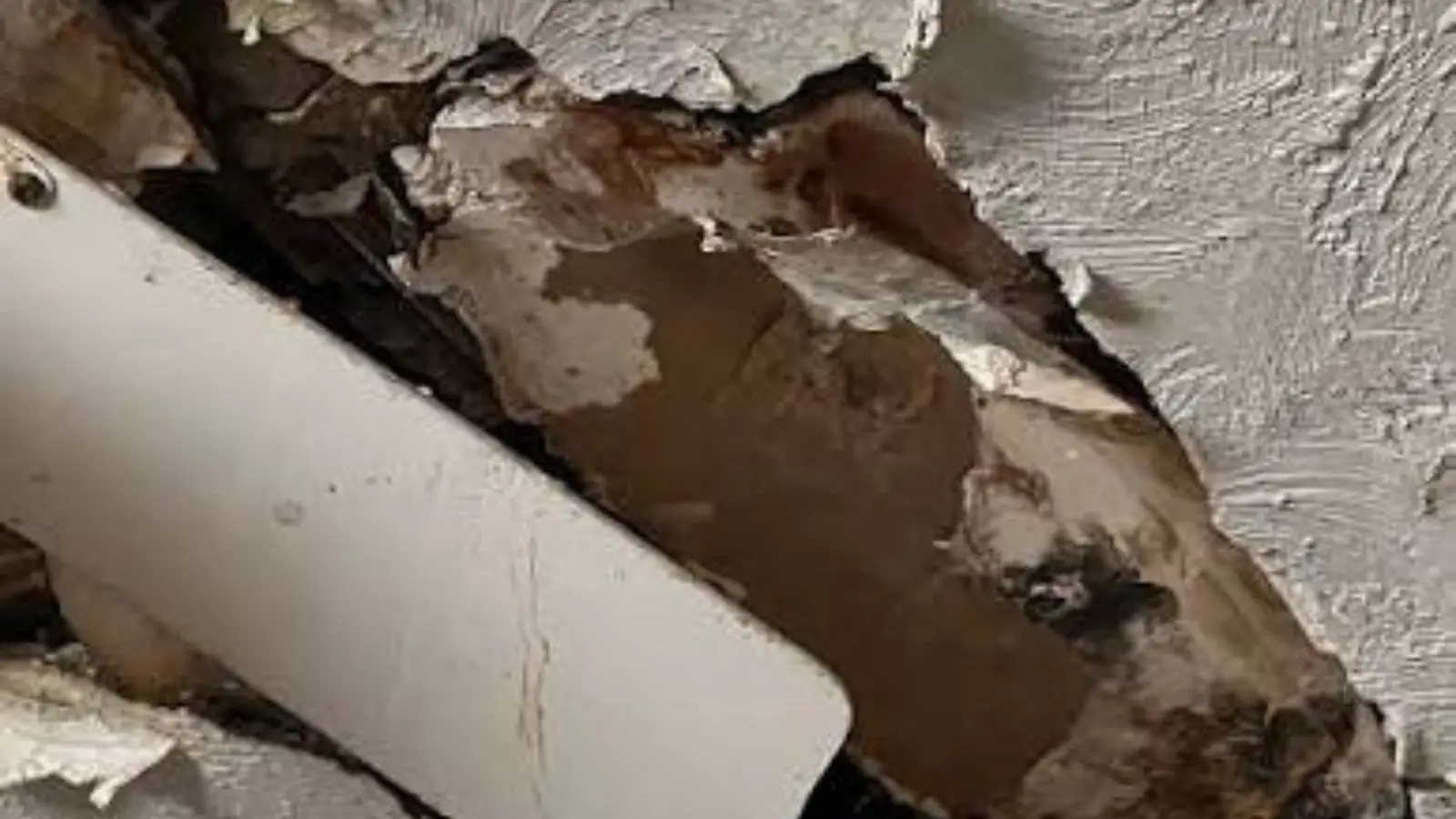
When water comes through a ceiling, do four things in this order. Get people and valuables out from under it, stop the source if you can reach it, catch or redirect the water, and photograph everything before you change anything. Then call the people who can dry the structure.
A wet ceiling is heavier than it looks. Drywall holds a lot of water, and insulation above it holds more. The goal of the first hour is to keep the ceiling from falling, keep the water from spreading sideways, and keep a record of what happened.
SafetyKeep Out From Under A Sagging Ceiling
A ceiling that bulges, sags or shows a dark, swollen spot is holding water. Treat that area like a loaded bucket. Move people and pets out of the room, and do not stand or walk directly beneath the bulge.
Check the light fixtures and ceiling fans near the stain. Water in a fixture is an electrical hazard. If the stain is near a light or an outlet, turn off the breaker for that circuit from the panel, and do not touch wet switches with wet hands.
If the wet area is large or the drywall has started to crack at the edges, stay out of the room entirely until someone has looked at it.
SourceFind And Stop The Water
The room under the stain is often not the room with the problem. Water travels along joists and pipes before it shows up, so the leak may be a few feet away from the wet spot.
Match the clue to the likely source.
- A stain under a bathroom or kitchen points to a supply line, drain, tub overflow or appliance above it.
- A stain along an exterior wall or near the roof line points to a roof, flashing, gutter or ice dam problem.
- Water that appears only during or after a storm points to the roof or a window above.
- Water that runs all the time, even in dry weather, points to plumbing.
If you think it is plumbing, close the shutoff valve for that fixture, or the main water valve if you cannot find it. If it is the roof, you usually cannot fix it from inside, so your job is to control what is already in the house.
Step By StepThe First Hour, In Order
Work through these in sequence. Skip any step that is not safe for you to do.
Clear the room
Move people, pets, electronics and furniture out of the wet zone. Cover items you cannot move with plastic sheeting.
Stop the source
Close the fixture valve or main water valve for a plumbing leak. For a roof leak, note the time and the weather.
Catch the drip
Set a bucket under any active drip and lay towels around it. Use a tarp under the bucket if the floor is finished.
Photograph first
Take wide and close photos and a short video of the ceiling, the floor below and the stain edges before you touch anything.
Call for help
Contact a restoration crew and your insurer. Describe what you see and ask what they need from you.
Relieving A Bulging Ceiling Safely
A bulge full of water can release all at once, and the water, drywall and insulation can come down together. Many homeowners are tempted to poke it. The safer method is to control the release.
Place a bucket under the lowest point of the bulge and lay plastic on the floor around it. Standing to the side, and not under it, use a screwdriver to puncture the lowest point of the bulge so the water drains in a stream instead of a sheet. Wear eye protection and keep your face and body out of the line of fall.
Make several small holes if one is not enough. Expect the water to be dirty, and expect the surrounding drywall to be weak afterward. If the bulge is large, or you cannot do this from a safe position, leave it for a crew.
TriageWhat To Do Based On What You See
Use this as a quick guide while you wait for help.
| What you see | Likely meaning | First action |
|---|---|---|
| Small brown stain, dry to the touch | Past leak or a very slow one | Photograph it, mark the edge with pencil and watch it |
| Damp stain, drip every few seconds | Active leak | Stop the source, catch the drip, call |
| Bulge or sag in the drywall | Trapped water, weak drywall | Stay out from under it, relieve it from the side or wait for a crew |
| Cracked or peeling paint around the stain | Moisture has been present for a while | Photograph it and have the area checked for hidden wetness |
| Water at a light fixture | Electrical hazard | Turn off the circuit at the panel and do not use the fixture |
Photograph Before You Clean Up
Photos are cheap and they cannot be recreated. Shoot the ceiling from several angles, the floor and furniture below it, and the suspected source. Include one photo with a tape measure or a coin in frame so the size of the stain is clear.
Write down when you first saw the water, when you shut the valve, and what you moved. Keep any wet material you remove until your insurer has said it can be thrown out.
Hail And Storm Leaks In Commerce City
The Colorado Division of Insurance hail advisory says to contact your insurer or agent as soon as you can, photograph the damage once it is safe, and cover roofs and windows to limit further damage. If a ceiling leak followed a hailstorm, that sequence is your checklist. Tarp or cover the roof opening if you can do it safely, and call before anyone climbs a wet roof.
The same advisory warns that wind and hail deductibles may be a percentage rather than a flat amount, and that damage not caused by the storm is not covered. In practice that means a ceiling stain with no clear storm link may be treated differently. Your photos and notes on the date and weather help show which damage came from which event.
Need The Ceiling Checked?
Call the 24/7 line. A crew can measure moisture above the ceiling and explain the scope and price before work starts.
Who To Call, And In What Order
Call a restoration crew for the wet ceiling, your insurer for the claim, and a plumber or roofer for the source. The crew often goes first because wet drywall and insulation do not wait. Drying the building cavity is what water damage repair and water mitigation start with, and the repair comes after that.
If water is still running into the house in quantity, ask about emergency water removal so the standing water goes first. The industry standard for water jobs is ANSI/IICRC S500, and a good crew will explain its drying plan in those terms.
Next StepsWhat Happens After The First Day
Once the source is stopped, a crew will usually open the ceiling where it is soft or wet, remove wet insulation, and set drying equipment. The ceiling is not repaired until readings show the framing and drywall around it are dry.
Neighbors in Denver and Brighton follow the same sequence. Water behaves the same way anywhere, and the order of stop, protect, document, dry and repair does not change.
FAQCommon Questions
Should I pop a bulging ceiling?
Only if you can do it from a safe position. Place a bucket below, stand to the side, wear eye protection and puncture the lowest point so the water drains in a controlled stream. If the bulge is large or you cannot reach it safely, wait for a crew.
Can I turn the lights on if the ceiling is wet?
Not near the stain. Water in a fixture is an electrical hazard, so turn off that circuit at the breaker panel and use lights from another circuit.
How long can a wet ceiling wait before it becomes a problem?
Do not wait. Wet drywall can weaken and sag, and damp insulation and framing can grow mold if they stay wet. Start drying as soon as the source is stopped.
Do I need to find the leak before I call a restoration crew?
No. Stop the water if you can, then call. A crew can use moisture readings to trace where the water traveled, and a plumber or roofer can fix the source.
Should I paint over the stain to hide it?
Not yet. Paint over wet drywall traps moisture and the stain often bleeds back through. Wait until the area is confirmed dry, then prime and paint.
My ceiling leaked after a hailstorm. What should I do before the insurer calls back?
Follow the Colorado Division of Insurance advice. Contact your insurer, photograph the damage once it is safe, and cover the roof opening or window to limit more water. Keep notes on the date and weather, because damage not caused by the storm is not covered.
Water still spreading? Call (303) 952-8295 and a crew can be dispatched the same day when available.