

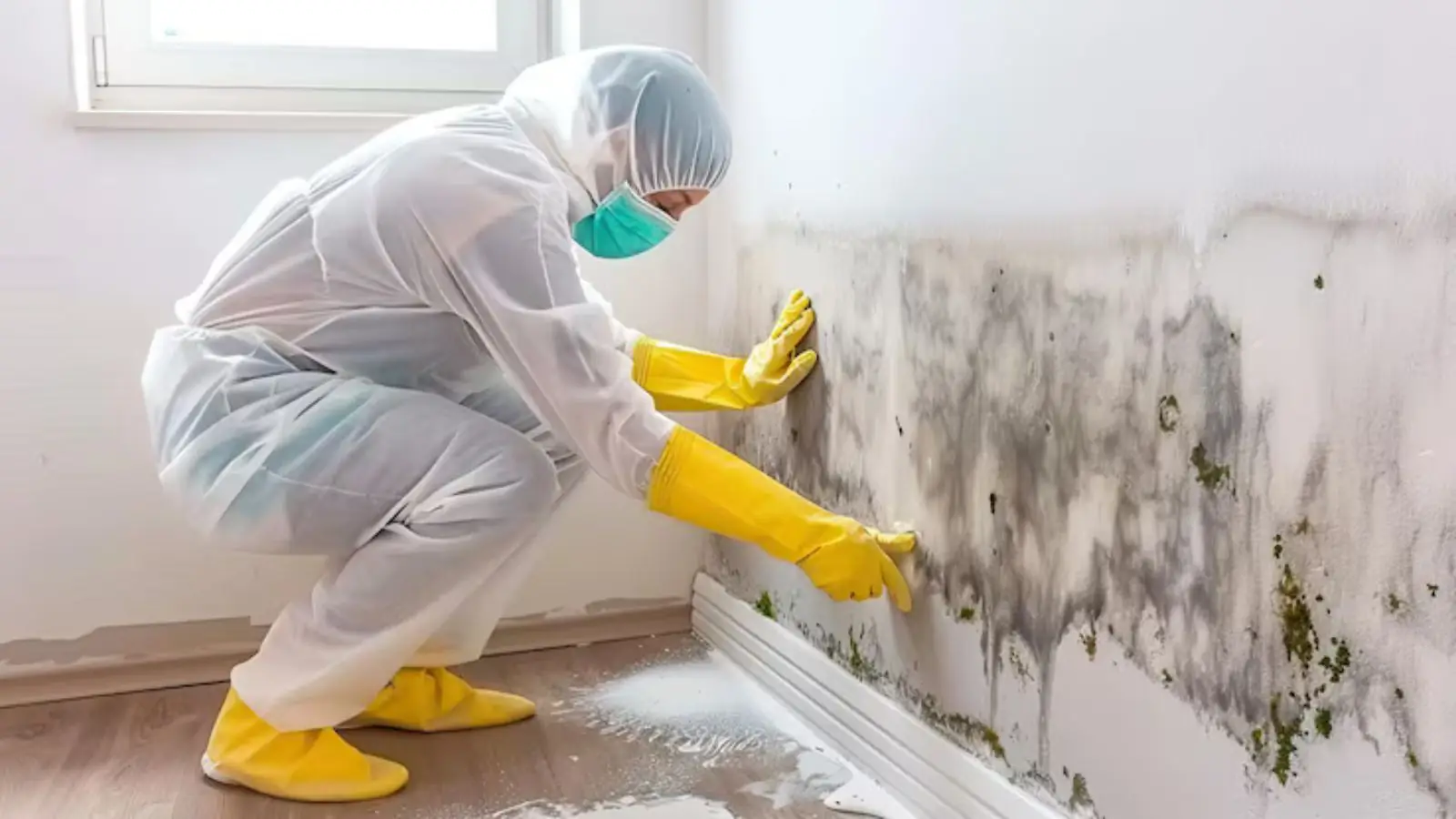
Mold remediation in Commerce City, CO is the process of finding the moisture that fed the growth, containing the area, removing or cleaning the affected material, and drying everything so it does not start again. It follows the ANSI/IICRC S520 standard for professional mold remediation, and you can ask any company whether its crews work to it.
Mold needs moisture. The EPA states that mold will not grow without water or moisture, so a leak, a flood, a condensation problem or a long-running humidity issue is nearly always behind it. Cleaning the surface without fixing the moisture is the most common reason it comes back.
This is a secondary service on this site. Water damage comes first, and if there is still a wet area in the building, water mitigation is the right place to start.
In Plain WordsI See Dark Spots Or Smell Something Musty
Most people find mold the same way. A stain shows up in a closet corner, a bathroom wall, a basement ceiling or behind a pulled-out sofa. Or they notice a musty smell that does not go away after a leak was fixed. Those are the signs that a remediation crew should take a look.
The first step is an inspection to find the source, the extent and the moisture level. In trade language the full job is mold remediation, and it is separate from cleaning a small spot with household supplies.
A note on health questions
Questions about how mold affects a specific person belong with a physician. This site does not make health claims. The crew's job is to find the moisture, control the area and remove the growth.
Mold Testing And Inspection
Inspection is a visual and moisture check of the suspect area, often with a moisture meter and a thermal camera. Some customers also want testing, such as air or surface sampling, to confirm what is present or to document the area before and after work.
Many buyers, sellers and lenders ask for an independent clearance test after remediation. An independent tester is someone who is not doing the removal, which keeps the result separate from the work. Whether a lender or buyer accepts a result is their decision, so ask them what they require. Ask whether your state licenses mold work and who must hold that license for testing and for removal.
If you are wondering how much notice an inspection needs, call the line and ask. The dispatcher plans an inspection around what you describe, and a crew can be sent the same day when available.
How It WorksWhat Remediation Involves
Find the source
Moisture mapping shows where water got in and whether it is still active.
Contain
Plastic barriers and controlled airflow keep spores from spreading.
Remove and clean
Affected porous material is removed, and hard surfaces are cleaned.
Dry and verify
The structure is dried and checked before rebuilding.
Mold Removal And Black Mold Cleanup
Mold comes in many colors, and color alone does not tell you what it is. Black mold is a common name for dark growth, and a lab test, not a color, is what identifies it. A crew treats dark growth the same way as any other: contain it, remove or clean it, and fix the moisture.
Small surface spots on hard materials such as tile may be cleaned by a homeowner. The EPA guide uses a rule of thumb of less than about 10 square feet for self-cleanup, and points larger areas and heavy water damage toward remediation guidance. Porous materials such as drywall, insulation and carpet that are visibly moldy are usually removed, not cleaned.
Bathroom walls, basement ceilings and closets next to an exterior wall are common places to find it. If the spot reappears soon after cleaning, there is still moisture behind it.
After A LeakMold After Water Damage
Mold often follows a leak that was not dried in time. A toilet supply line, an air handler condensate line, a roof leak or a washing machine hose can each leave a wall or ceiling wet long enough for growth to start. The EPA advises fixing the water problem as part of cleanup.
That is why dry-out comes first. A crew uses emergency water removal and drying equipment to remove moisture, then remediation removes growth that already started. If the building is dry and the cleanup is finished, water damage repair rebuilds the walls and ceilings.
Find The Moisture Before The Mold Returns
Call and describe the spot, the smell and what leaked.
A Simple Decision Guide
| Situation | Reasonable approach | Why |
|---|---|---|
| Small spot on tile or glass | Clean it yourself and fix the moisture | Hard surface, small area |
| Growth on drywall, ceiling tile or carpet | Call a remediation crew | Porous material usually removed |
| More than about 10 square feet | Call a remediation crew | EPA guidance points to remediation guidance |
| Mold after sewage or flood water | Call a restoration crew | Contaminated water changes the work |
| Musty smell, nothing visible | Call for an inspection | Source may be behind a wall or under a floor |
What Affects Mold Remediation Cost
Mold jobs range from a small closet patch to a whole basement. The scope decides the price.
Size of the area
More square feet means more containment and removal.
Materials affected
Drywall and carpet are removed. Framing may be cleaned.
Water source
An ongoing leak must be fixed before work is finished.
Containment and airflow
Larger areas need more barriers and air filtration.
Testing and rebuild
Testing and the repair afterward are scoped separately.
No exact prices are posted because every job differs. Want your real number? Call (303) 952-8295 and the scope and price are explained before any work starts.
Insurance and mold
Coverage for mold often depends on whether the water that caused it came from a covered event, and many policies limit it. Check your policy or ask your insurer, and keep photos and written scopes. The Colorado Division of Insurance advises contacting your insurer as soon as possible after damage.
Mold Questions In Commerce City Homes
Moisture sources vary from house to house. A basement near a high water table, a bathroom without a working fan, and a leak behind a washer can all feed growth. Because each home differs, a crew checks the actual moisture readings before deciding what to remove.
If your issue began with a storm or flood, start with flood damage restoration so the water and contaminated material are handled first. Crews also serve Thornton, Aurora and Denver from the Commerce City base.
FAQCommon Questions
Can mold be removed permanently?
Remediation removes the growth that is there, but it cannot promise mold will never return. Mold grows when moisture returns, so fixing the water source and keeping the area dry is the lasting step.
Do I need mold testing before removal?
Not always. Visible growth with a known water source is often handled directly. Testing is useful for documentation, for unclear smells and for independent clearance after work, and some buyers or lenders ask for it.
What does mold remediation cost?
It depends on the area, materials, containment and testing. The crew explains the scope and price before work starts, and no exact prices are posted online.
Can I clean mold with bleach?
Small hard-surface spots are often cleaned by homeowners, but cleaning does not fix the moisture. Porous material with growth is usually removed, and the EPA points larger areas toward professional guidance.
How much notice do you need for an inspection?
Call the line and describe the situation. A crew can be sent the same day when available, and the dispatcher explains what to expect.
Do you handle mold emergencies at night or on weekends in Commerce City?
The dispatch line is open 24 hours a day. Mold itself is rarely an emergency, but a leak feeding it is, so call right away if water is still active.
Water still spreading? Call (303) 952-8295 and a crew can be dispatched the same day when available.