

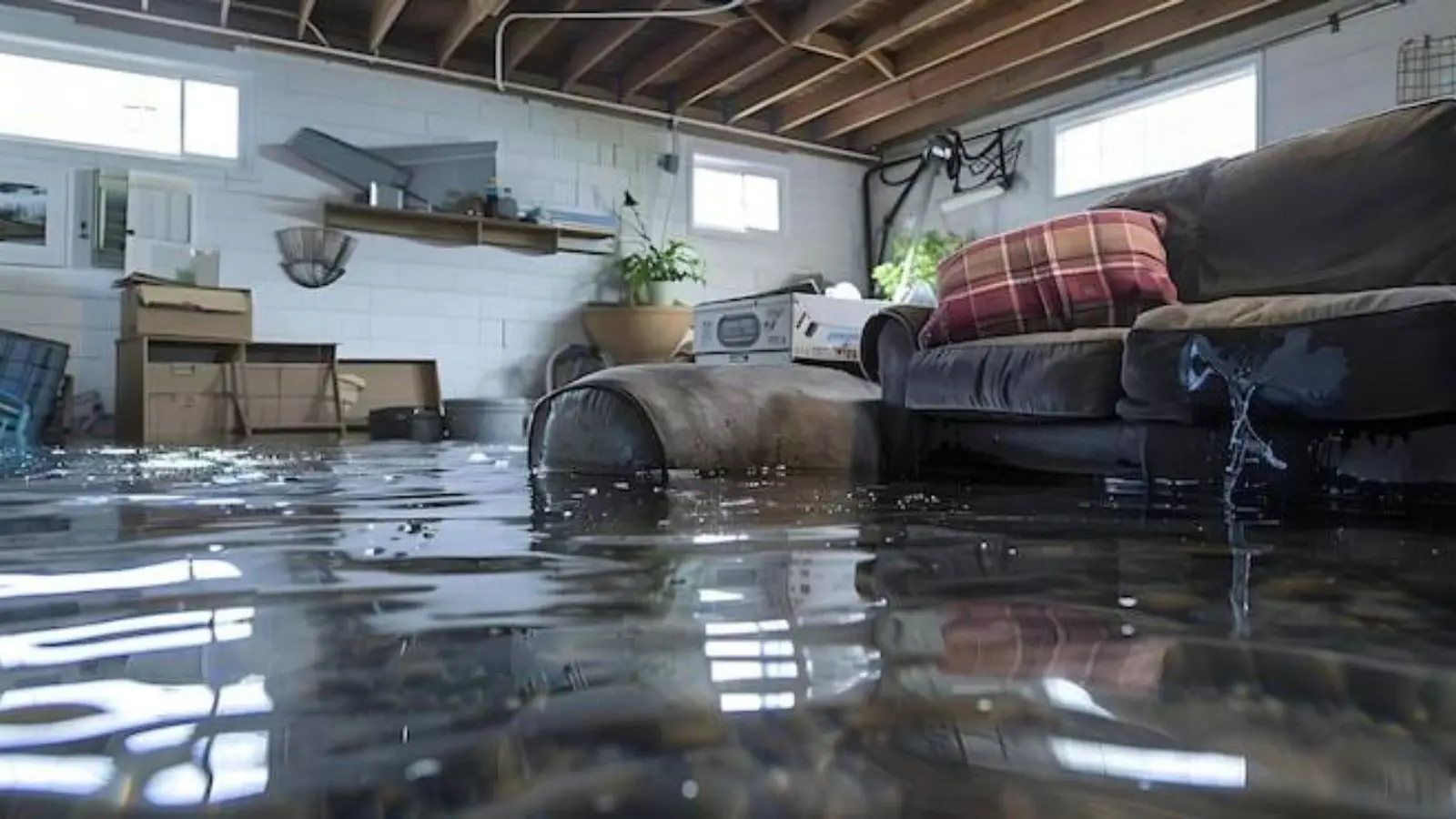
If water is coming into a Commerce City home or business from a storm, a creek, a failed sump pump or a sewer line, treat it as an emergency. Flood damage restoration is the full response to that event: pumping out the water, removing materials that cannot be cleaned, drying the structure, and sanitizing what remains. The 24/7 line is open now, and a crew can be dispatched the same day when available.
While you wait, stay out of the water if the basement floor outlets, panel or appliances are in it. Shut off electricity only if you can reach the panel while standing dry. Move people and pets away from the area, lift small valuables, and do not use a household vacuum on standing water.
Flood restoration differs from a clean-water leak because flood water is classed as Category 2 or Category 3 under the ANSI/IICRC S500 standard, which means it may carry contamination. That changes what is kept, what is thrown away, and how the cleaning is done. You can ask any company whether its crews work to S500.
Urgent SituationsWhen Flood Water Is An Emergency
Water is an emergency when it is still rising, when it has reached electrical outlets or the panel, when it came from a sewer line, or when it covers more than a small area of finished floor. Active flooding also counts when you cannot find or stop the source.
Call 911 for any electrical or gas risk before calling the restoration line. If you smell gas, leave the building. If the water source is a utility main outside your property, report it to your water or wastewater provider. In most of Commerce City that is the South Adams County Water and Sanitation District.
Before The Crew ArrivesIf Water Is Still Spreading
Stop the source
Close the main water valve if a supply line is the cause. For storm or groundwater, you cannot stop it, so focus on safety.
Power down safely
Turn off power to wet areas only if the panel is dry and reachable. Otherwise stay out and call the utility or 911.
Protect people and pets
Keep children, pets and anyone with a health condition out of contaminated water.
Lift what you can
Raise small valuables, papers and electronics. Do not try to move heavy furniture through water.
Photograph first
Take photos and short video of the water line and damaged items before anything is moved.
Call the 24/7 line
Describe the source, depth and what the water touched, and ask what to expect on arrival.
How Flood Water Is Classified
The ANSI/IICRC S500 standard groups water by contamination level. Flood water is rarely Category 1 once it has moved across soil or floors.
| Category | Typical source | What it means for materials |
|---|---|---|
| Category 1 | Broken supply line or overflowing sink | Often dried in place if addressed quickly |
| Category 2 | Washing machine drain, dishwasher backflow, sump overflow | Porous materials such as carpet pad and drywall are often removed |
| Category 3 | Sewage, storm and river flood water | Porous materials are removed and the structure is sanitized |
Basement Flooding Cleanup
Basements flood from heavy rain, a failed sump pump, a blocked window well, a sewer backup or a high water table. In a finished basement the first hour matters, because carpet, pad, drywall and stored boxes all pull water upward.
The crew pumps standing water, extracts what soaked into carpet and padding, and removes flood-contaminated drywall and trim to a line above the water mark. Air movers and dehumidifiers dry what stays. Concrete floors, framing and subfloor are measured with moisture meters until the readings return to normal. Restoration is not waterproofing, so if the same basement floods every storm, ask a waterproofing contractor about the cause after the cleanup.
SewageSewage Backup Cleanup
Sewage is Category 3 water. Stay out of the area, keep children and pets away, and do not run drains. A crew uses protective equipment, pumps and extracts the liquid, removes porous materials that touched it, then cleans and disinfects hard surfaces and dries the space.
Sewage in a basement drain can come from a blocked private line or from the public main. If you are not sure, ask your utility. For most of the city, the South Adams County Water and Sanitation District runs a wastewater emergency line, and reporting the backup early helps sort out whose pipe it is.
Other Flood SpacesCrawl Spaces And Whole-House Water
Crawl spaces and slab-on-grade homes behave differently from basements. Water in a crawl space can sit hidden for days under insulation and wiring, so a crew checks every accessible area with a camera and a moisture meter. Whole-house flooding from a burst line or storm follows the same process on every floor, starting with the lowest level and working up.
Flood Water Is Contaminated By Default
Call before cleaning it yourself, so the crew can tell you what is safe to touch.
What Drives The Cost Of Flood Restoration
Every flood loss is different. These factors shape the written scope.
Water category
Category 3 water adds removal, disinfection and disposal steps.
Area and depth
Square footage affected and how high the water reached set the amount of material that is removed.
Materials touched
Carpet, hardwood, drywall, cabinets and contents are treated differently.
Drying days and equipment
More air movers and dehumidifiers for more days raises the total.
Rebuild scope
Repair after drying is separate and is priced from the final scope.
No exact prices are posted here because the scope decides them. Want your real number? Call (303) 952-8295 and the scope and price are explained before any work starts.
Flood coverage is often separate
Standard homeowners policies often exclude flood damage from rising water, and separate flood insurance is the usual way to cover it. Sudden damage from inside the house, such as a burst pipe, is treated differently. Check your policy or ask your insurer, and photograph the damage before anything is moved.
Flood Risk Around Commerce City
Commerce City sits along the South Platte River valley, and the city's own history page describes early settlement there in the 1850s. For your own address, the reliable check is the FEMA Flood Map Service Center, which shows whether a property sits in a mapped floodplain, and the city's building department can answer questions about local floodplain rules. Ask both before buying flood insurance or planning repairs.
After the water is out, the next stages are water damage cleanup and then water damage repair. Crews also respond to Brighton and Aurora when storm water affects more than one area.
FAQCommon Questions
How fast should flood water be removed?
As fast as safely possible. Porous materials absorb water quickly, and mold can begin in a day or two in a warm, closed space. Call the 24/7 line the moment you find it so extraction and drying can begin.
Is flood water in my basement dangerous?
It can be. Flood water often carries contamination from soil, drains or sewage, and it can reach electrical outlets or appliances. Stay out of it and call for help before wading in.
Can carpet and drywall be saved after a flood?
Category 3 water usually means porous materials such as carpet pad, drywall and insulation are removed. Hard surfaces can often be cleaned and dried. The crew decides item by item with moisture readings.
Will my homeowners insurance cover flood damage?
Flood from rising water is often excluded from standard policies and covered by separate flood insurance, while sudden damage from inside the house may be covered. Your policy decides, so ask your insurer.
Does restoration stop the next flood?
No. Restoration cleans, dries and prepares the area for repair. It is not waterproofing. If the same space floods repeatedly, talk to a waterproofing or drainage contractor about the cause.
Do you handle flood damage emergencies at night or on weekends in Commerce City?
Yes. The line is open 24 hours a day, every day. A crew can be dispatched the same day when available, and the dispatcher can tell you what to do safely while you wait.
Water still spreading? Call (303) 952-8295 and a crew can be dispatched the same day when available.