

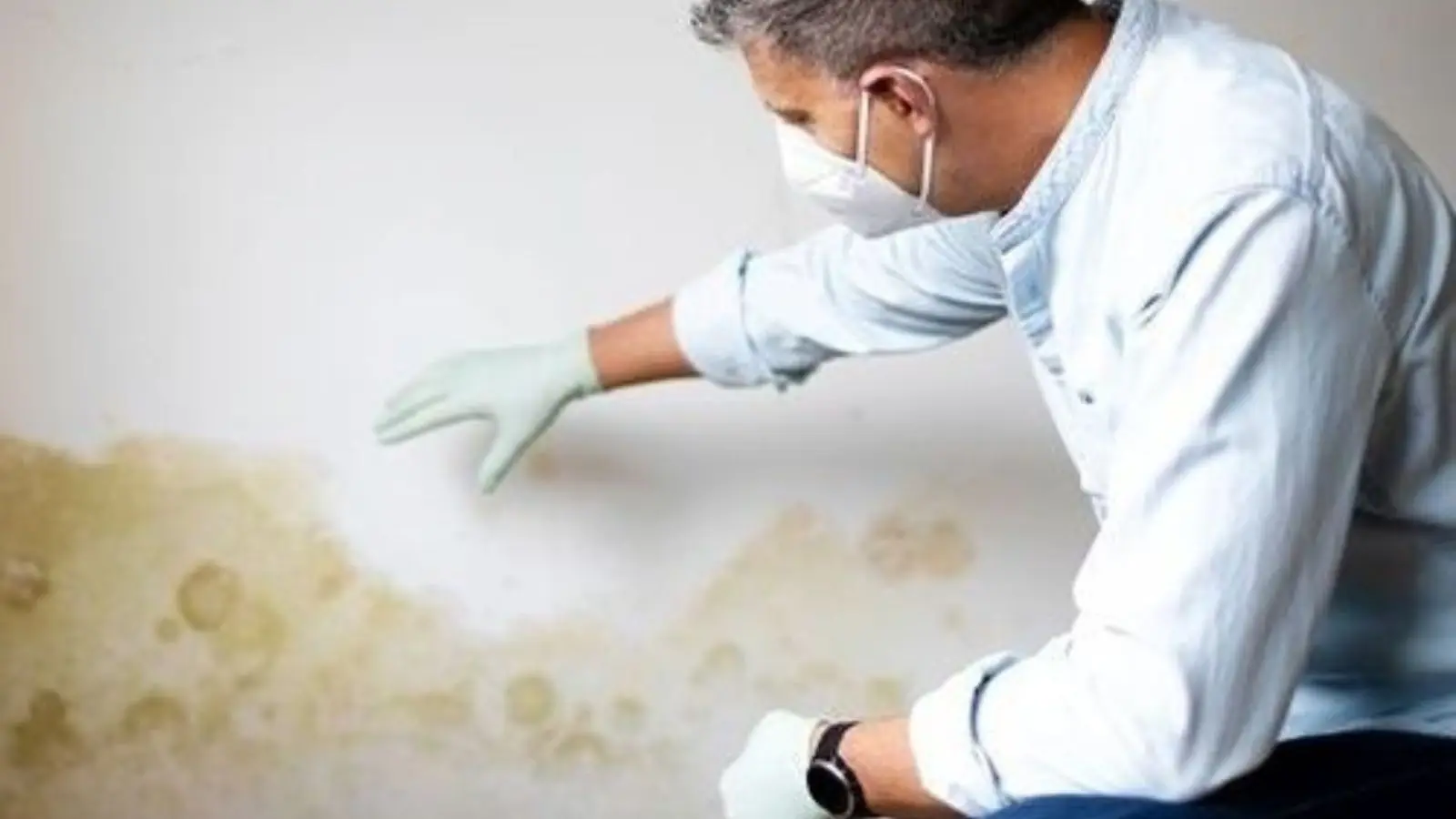
Wet drywall can be saved if it is still firm, has been wet for a short time and was exposed to clean water. Drywall that is soft, crumbling, bulging or stained from sewage should be cut out and replaced. The quick test is to press a thumb into the surface. If it dents, flakes or feels like wet cardboard, it has lost its strength.
Time matters. Gypsum board starts losing strength within a day or two of soaking, and the paper face feeds mold if it stays damp. The sections below explain how to test, cut and patch.
TestingHow To Test A Wet Wall
Start by turning off power to any outlet or switch on the wet wall. Water and wiring do not mix, and an electrician can check the circuit if you are unsure. Then press along the wall at knee height, at chest height and just below the ceiling, since water travels and wicks upward.
Look for staining, a bubbled surface, loose tape at the seams and a musty smell. A pin-type or pinless moisture meter gives a number, and a professional will compare it to a reading taken from a dry wall in the same house.
Decision GuideDrywall Conditions And What To Do
Use this as a starting point. Hidden moisture can change the answer.
| Condition | Usually means | Common response |
|---|---|---|
| Firm, slightly damp, clean water, caught early | Surface got wet but the board kept its strength | Dry in place with air movers and recheck readings |
| Stain only, wall dry and firm | Old or minor event that has stopped | Seal, prime and paint after the source is fixed |
| Soft or dents under a thumb | Gypsum has absorbed water | Cut out and replace |
| Bubbling or peeling paint | Moisture behind the paint film | Open it and check the cavity, then dry or replace |
| Water stayed more than a day or two | Mold risk grows on paper and framing | Remove the lower section and dry the cavity |
| Sewage or flood water contact | Contaminated porous material | Remove and replace, wearing protective gear |
Where To Cut And Why
When drywall must come out, a common practice is a flood cut about 12 to 24 inches above the highest visible wet line. Cutting above the line gives you a clean edge on dry material and exposes the wall cavity. Cut along a stud when you can so the new patch has something to screw into.
Remove wet insulation as well, because it holds water like a sponge. Leave the cavity open so air can reach the stud faces and the back of the neighboring board.
DryingDry In Place Or Remove It
Drying in place works when the board is firm, the water was clean and readings drop quickly. It saves demolition and repainting. Drilling small holes at the baseboard lets air move into the cavity.
Removal is the safer choice when the board is soft, when the loss involved sewage or when the wall has been wet for days. A crew has to weigh cost against risk, and the scope and price are explained before work starts. Equipment should stay until the framing reaches a dry reading, not just until the paint feels dry.
Permits And Contractors In Commerce City
The City of Commerce City Building Safety Division issues building permits and conducts inspections, and its homeowner page says many home projects need a permit and to call before starting work. Its pages do not state a rule for water damage repair specifically, so a call to 303-289-3790 is the way to ask about your project. A short call beforehand costs you nothing and avoids surprises.
The same homeowner page says homeowners do not need a contractor's license to perform certain types of work themselves. If you hire someone, the city suggests confirming the contractor is licensed and can provide a copy of the city permit. That is a practical step before a large drywall replacement.
Want A Second Opinion On The Wall?
Call the 24/7 line for moisture readings and a written scope.
Mud, Tape And Finish
Only start once the framing and cavity read dry. Patching wet material locks the problem in.
Hang the patch
Cut a piece of board to fit the opening and screw it to the studs. Keep screws just below the paper surface without breaking it.
Tape the seams
Embed paper or mesh tape in a thin layer of joint compound over each seam. Let it dry fully before the next coat.
Apply coats
Add two or three thin coats, each wider than the last. Sand lightly between coats and wipe the dust away.
Prime and paint
Use a stain-blocking primer so the repair does not flash through the paint. Match texture last, then paint the whole wall for an even look.
When The Job Is Bigger Than A Patch
Call a professional when more than one room is wet, when the water was sewage, when the wall is behind a bathroom or kitchen with a long-running leak or when you find dark growth. Large walls and ceilings also add risk from weight and dust.
For floods, flood damage restoration covers extraction and removal of porous materials, and water damage repair covers the patching and finish work afterward. Crews also serve nearby cities, including Denver and Thornton.
FAQCommon Questions
Can wet drywall dry out on its own?
Sometimes, if it was only briefly damp and air can reach both sides. Hidden moisture in the cavity is harder to judge, so take readings before painting or closing it up.
How high should I cut wet drywall?
Many crews cut a bit above the highest wet line, commonly 12 to 24 inches above it, then check the cavity. Cut to a stud if possible so the patch is easy to fasten.
Is it safe to paint over a water stain?
Only after the source is fixed and the wall reads dry. Use a stain-blocking primer, since ordinary paint may let the stain show through.
Should I remove wet insulation behind drywall?
Usually yes. Insulation holds water and dries slowly, so removing it lets the cavity dry faster.
Do I need a professional or can I do it myself?
Small patches on clean water losses are often homeowner projects. Sewage, large areas or suspected growth call for a professional.
Do I need a permit to replace water-damaged drywall in Commerce City?
The city pages do not state a rule for water damage repair specifically. Call the Building Safety Division at 303-289-3790 before starting, since the city says many home projects need a permit.
Water still spreading? Call (303) 952-8295 and a crew can be dispatched the same day when available.