

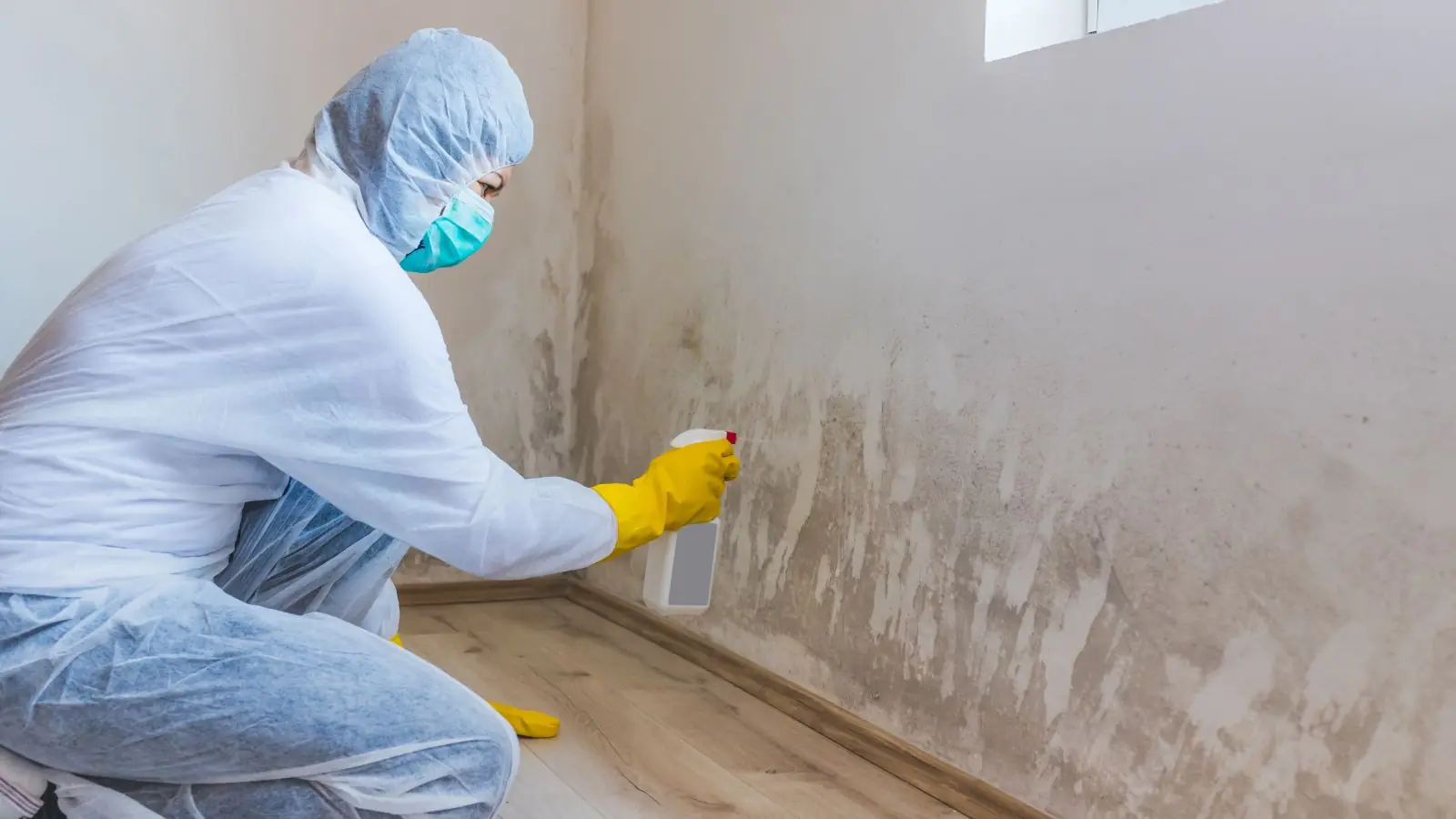
Hard surfaces such as concrete and glazed tile are cleaned with detergent, water and a stiff brush. Solid wood framing is cleaned and, if the stain remains, sanded. Soft or porous things, including drywall, insulation, carpet and cardboard, are removed and thrown away.
That one line of difference is the most important point in this guide. Cleaning works on materials where growth sits on top, and removal is for materials where it goes inside. Everything below applies to small areas and assumes the water problem has been fixed.
PrepareSet Up Before You Scrub
Wear an N95 or better respirator, goggles and rubber gloves, and keep the basement ventilated with a fan that blows outside. Close the door to the rest of the house and tape plastic over supply vents in the work area. A cleaning day is also a good time to run a dehumidifier.
Mist the surface lightly with water before brushing so growth is not thrown into the air. Work from the cleaner area toward the dirtier one, and keep a bucket of clean water and a second for rinse water.
At A GlanceClean Or Remove: Surface Guide
Use this table to choose the method before you start.
| Surface | Usual method | Remove instead when |
|---|---|---|
| Poured concrete floor or wall | Scrub with detergent and rinse | Never needed for the concrete itself |
| Concrete block | Stiff brush, detergent, rinse, dry | Mortar joints crumble or water keeps seeping |
| Solid wood framing | Scrub, then sand light stains | Wood is soft, crumbly or dark all the way through |
| Painted drywall | Usually removed | Almost always, once growth is present |
| Carpet and pad | Usually removed | Growth or a musty smell remains after drying |
| Cardboard boxes and paper | Discard | Always, since paper holds growth |
| Plastic, glass and metal items | Wash with detergent, dry | Rust or pitting from long exposure |
| Upholstered furniture | Discard or send to a cleaner | Growth is on the fabric or padding |
Cleaning Concrete And Block Walls
Poured concrete is the easiest surface in the basement. Scrub with a stiff nylon brush and a bucket of detergent and water, then rinse with clean water and wipe up the runoff with rags. Let it dry for at least a day with a fan running.
Concrete block is porous, so it needs more patience. Work the brush into the texture and the mortar joints, and rinse twice. If the block feels damp again within a day or two, water is moving through the wall, and cleaning alone will not hold. That is a job for mold remediation together with a drainage or sealing fix.
WoodCleaning Wood Framing And Shelving
Test the wood by pressing a screwdriver tip into it. If the tip sinks in easily, the wood has lost strength and the stud or joist needs a professional to assess it. Firm wood can be scrubbed with detergent, rinsed with a damp rag and dried with a fan.
Light staining that remains after scrubbing can often be sanded away. Use a HEPA vacuum on the dust and bag the rags and sandpaper after use. Seal the clean wood only after it has been dry for several days.
Stored ItemsWhat To Do With Boxes, Books And Furniture
Move salvageable items out of the basement before you clean, and sort them by material. Plastic bins, glass and metal can be washed and dried. Paper, cardboard and soft goods that show growth are better thrown away than cleaned.
For items with real value, such as photographs or papers, place them in a sealed bag and talk to a conservator or a contents restoration company. Do not store them damp, since the problem will continue in the bag.
Why Timing Matters In A Commerce City Basement
The EPA guide to mold, moisture and your home says that no mold grows without water or moisture, and that you must fix the water problem. In a basement, the chilly walls are where indoor moisture condenses first, so check them for dampness whenever you clean. A wall that stays cool and damp will grow mold again no matter how well you scrub.
The NWS Boulder climate statistics for the Denver station give an average first freeze of October 7 and an average last freeze of May 5. Between those dates basement walls stay cold and windows tend to stay closed. Plan your cleanup for the dry months when you can ventilate, and recheck the same walls once the first freeze arrives.
Mold Past The Surface?
Call the 24/7 line for moisture readings and a written scope of what to clean and what to remove.
Dry, Check And Keep Moisture Down
Finish by drying every cleaned surface with a fan, and call for water mitigation if the structure stays damp. Then run a dehumidifier until a moisture meter or a hygrometer shows stable readings. Keep checking the readings for several days after cleanup. Fix gutters and grading problems that send water toward the foundation.
Check the area every week for a month. New spots, a returning smell or a damp patch on the wall are signs the moisture source is still active. Crews that handle water damage restoration in Aurora and Denver see this pattern often, and the fix is nearly always found in the water and not in the cleaner.
FAQCommon Questions
What is the best cleaner for mold on basement concrete?
Detergent and water with a stiff brush works well, followed by a rinse and thorough drying. The scrubbing does the work, and drying keeps it clean.
Can I clean moldy drywall instead of replacing it?
Surface wiping rarely solves it. Drywall is porous and growth penetrates the paper and gypsum, so affected sections are normally cut out and replaced.
Should I use bleach on basement mold?
Detergent and water removes growth from hard surfaces. Bleach does not penetrate porous materials, and mixing it with other cleaners can create dangerous fumes, so avoid mixing.
How do I know the mold is really gone?
Look for clean surfaces, no musty smell and stable moisture readings. Then recheck weekly for a month, and if growth returns, find the water source.
Can a dehumidifier alone stop basement mold?
It helps by lowering humidity, but it does not fix a leak or seepage. Use it together with repairs to the water source.
When should I stop and ask a Commerce City crew to take over?
Stop when the area is larger than about 10 square feet, when framing feels soft or when growth is inside a wall. Cold-season condensation can keep feeding basement walls from October into spring, so a recurring patch deserves a professional look.
Water still spreading? Call (303) 952-8295 and a crew can be dispatched the same day when available.