

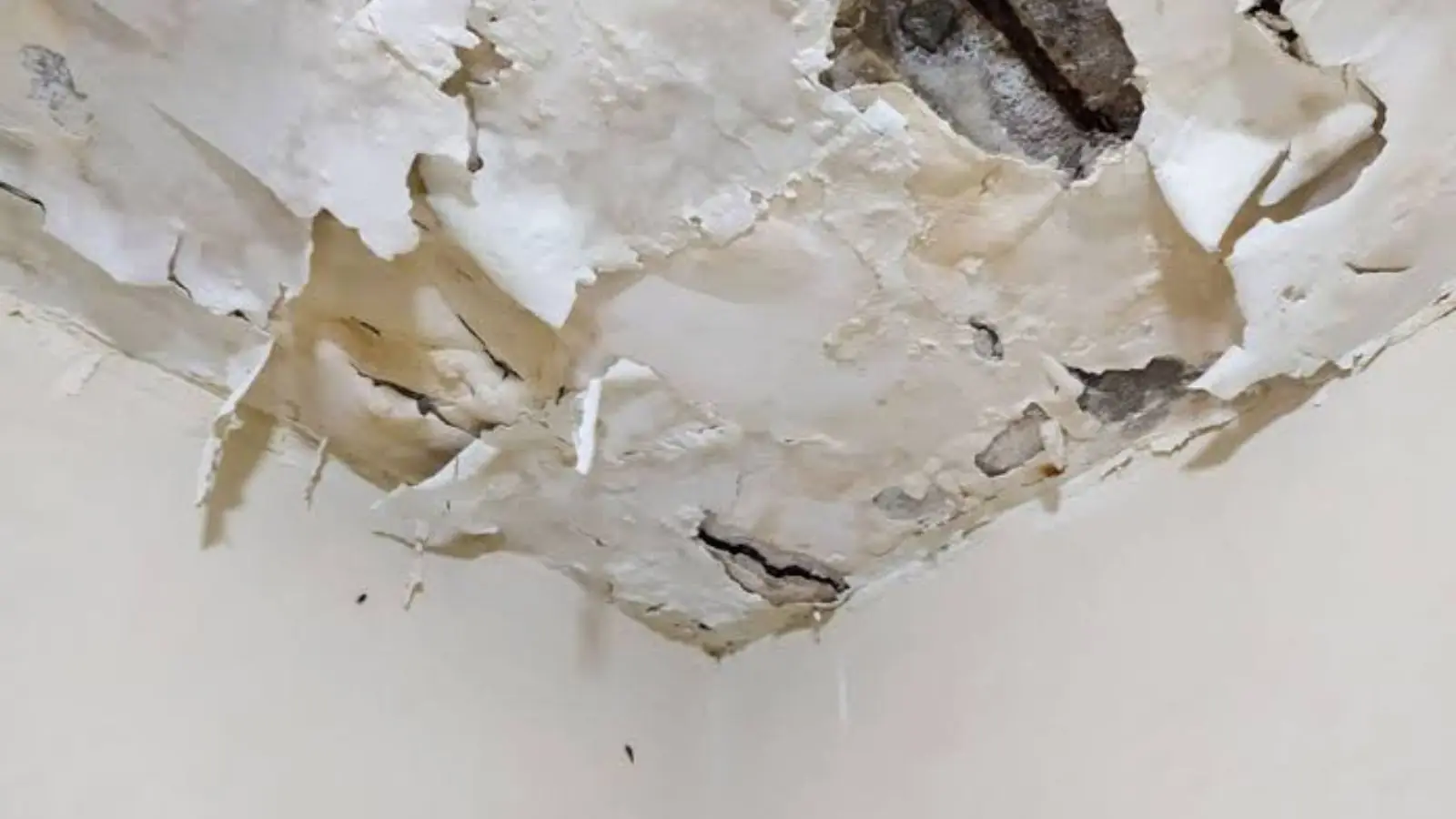
You can repair a water-damaged ceiling yourself once the leak is fixed and the structure is fully dry. The sequence is to cut out the damaged drywall back to solid framing, install a new piece, tape the seams, apply joint compound in thin coats, sand, prime, match the texture and paint.
The order matters more than speed. Compound needs time to dry between coats, and primer has to go on before paint or the patch will show as a dull square. Plan on at least two days for a small patch.
Before You StartConfirm The Ceiling Is Actually Dry
Patching over damp material is the most common reason a repair fails. Moisture left in the drywall or insulation can stain the new paint, loosen the tape and grow mold in the cavity.
Press on the ceiling around the stain. It should feel firm and cool to the touch, not soft or clammy. A moisture meter gives a better answer than your hand, and a crew can read the framing and insulation above it as well. If the leak source has not been fixed by a plumber or roofer, stop here. Repairing first only means doing it twice.
ToolsTools And Materials
Gather everything before you cut. A small patch needs only a few items.
- Drywall saw or utility knife, tape measure and a pencil
- Replacement drywall in the same thickness as your ceiling
- Drywall screws, a drill or screwdriver, and scrap wood for backing if needed
- Paper or mesh tape, and joint compound
- 6 inch and 10 inch taping knives, a sanding sponge or pole sander
- Stain-blocking primer, texture material that matches your ceiling, and paint
- Drop cloths, dust mask, eye protection and a ladder
Repair Steps From Cutting To Paint
Work in this order. Let each stage dry fully before the next.
Cut out the damage
Mark a square or rectangle that extends past all soft or stained material to the nearest solid framing. Cut along the line and remove the piece. Pull out any wet or sagging insulation in the opening.
Set backing
If the cut edges do not land on a joist, screw scrap lumber to the framing inside the opening to give the new piece something to attach to.
Install the patch
Cut new drywall to fit with a small gap. Screw it to the framing with the screw heads just below the surface, not through the paper.
Tape the seams
Bed paper tape in a thin layer of compound over each seam, or apply mesh tape and cover it. Press out the excess with the knife.
Mud in thin coats
Spread compound a few inches past the seam, let it dry, sand lightly, and apply a wider second coat. Feather the edges until they vanish.
Sand and prime
Sand smooth, wipe off the dust, and apply a stain-blocking primer over the whole patch and the old stain.
Match the texture
Apply texture with a brush, roller or spray can to match the surrounding ceiling. Test on cardboard first.
Paint the ceiling
Paint the patch, then roll the whole ceiling to the nearest corner so the edge of the repair is not visible.
Mistakes That Make A Patch Show
Thick compound cracks as it dries and takes much longer to harden. Several thin coats beat one heavy one every time. Skipping primer lets old stain bleed through the new paint, and a patch painted alone looks like a flat spot on the ceiling.
Mismatched texture is the other giveaway. Practice on a scrap of cardboard until the pattern looks right, and let the texture dry before you paint. If the ceiling has a heavy or unusual texture, expect to spend extra time blending it.
Time And EffortPatch Size And What To Expect
These are rough guides for a careful first-time repair.
| Patch size | Difficulty | Notes |
|---|---|---|
| Small stain, no soft drywall | Easy | Prime with stain blocker and repaint after confirming it is dry |
| Hand-sized to dinner-plate hole | Moderate | Needs backing and several thin coats of compound |
| Section between two joists | Moderate to hard | Cut to framing, tape and blend a wide area |
| Large area or sagging ceiling | Best left to a pro | Overhead work, heavy panels and extensive texture matching |
Insurance And Permit Notes For Commerce City
If you plan to file a claim, check with your insurer before you repair. The Colorado Division of Insurance burst pipe advisory says to prevent further damage but get instructions from the company before making any repairs. It also says to keep receipts and other records, so save every receipt for materials and any help you hire, and photograph the ceiling before you cut.
The City of Commerce City Building Safety Division says many home projects need a building permit and asks homeowners to call before starting work. Its pages do not state a specific rule for water damage repair, so the safest step is a quick call to 303-289-3790. The division also says homeowners may do certain work themselves, and suggests confirming that a hired contractor is licensed and can provide a copy of the city permit.
Rather Not Cut Into The Ceiling Yourself?
Call the 24/7 line. The scope and price are explained before work starts.
When The Job Is Bigger Than A Weekend
Hire help when the damaged area spans more than one joist bay, when insulation above it was soaked, when the ceiling has an unusual texture, or when you are unsure whether the area is dry. A pro can also spot a damp cavity you cannot see from below.
The broader water damage repair process covers drying, removal and rebuilding in one plan. If the leak came with other wet materials, the wall and floor repair water damage cleanup steps apply too. And if you find mold when you open the ceiling, stop and read up on mold remediation before you go further.
NearbyThe Same Steps Anywhere In The Metro
This sequence works the same in Thornton, Aurora and across the Denver area. Drywall is drywall. What varies is your insurer, your texture and how many layers of old paint you have to blend into.
FAQCommon Questions
How long should a ceiling dry before I repair it?
There is no fixed number. It depends on how wet it was, the airflow and the humidity. Wait for moisture readings, or at least a firm, dry feel, before patching. A crew can confirm the framing and insulation above are dry too.
Can I just paint over a water stain?
Only after the area is dry and the leak is fixed. Use a stain-blocking primer first, because regular paint often lets brown stains bleed back through.
Do I have to replace the whole ceiling?
Usually not. If the damage is limited to one area, cut back to solid framing and patch that section. A large, sagging or widely stained ceiling may be better replaced.
What if I find mold when I cut open the ceiling?
Stop and do not disturb it. Fix the moisture source and read up on mold cleanup. For larger areas, ask a contractor with mold cleanup experience and check references.
Should I talk to my insurer before I start repairs?
Yes. The Colorado Division of Insurance advises getting instructions from the insurer before making repairs and keeping receipts and records of what you spend.
Does Commerce City require a permit to patch a ceiling?
The Building Safety Division pages say many projects need a permit and to call before starting, but they do not state a rule for water damage repair. Call 303-289-3790 to ask about your specific job.
Water still spreading? Call (303) 952-8295 and a crew can be dispatched the same day when available.