

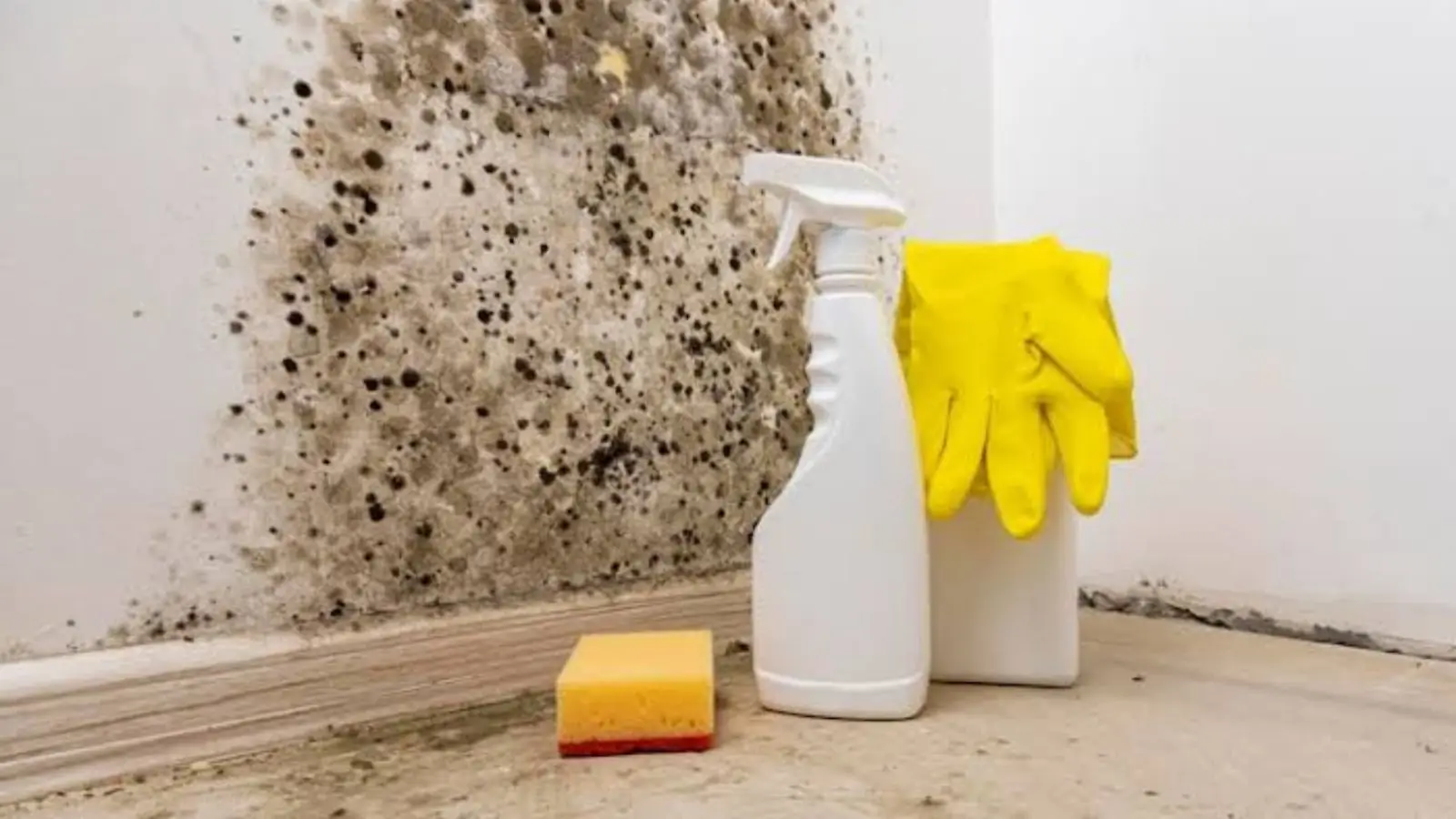
Bathroom wall mold grows because steam, splashes and slow leaks keep the surface damp. Dark spots on grout, caulk, painted drywall and around the ceiling fan are usually surface growth. A small patch can often be cleaned with detergent and water, and then the cause has to be fixed.
Cleaning alone does not stop it. The EPA guide on mold and moisture says no mold grows without water or moisture, so the lasting fix is to dry the area and find the water source.
CausesWhere The Moisture Comes From
The most common cause is poor ventilation. A shower puts a lot of water vapor into a small room, and if the fan is weak, undersized or not vented outside, that vapor settles on walls and ceilings. Closing the door and skipping the fan after a shower makes it worse.
Failed caulk and cracked grout are the next suspects. Water gets behind the tile and into the wall cavity, and what you see on the surface may be the small part of a bigger problem. Leaking supply lines, a dripping shower valve or a loose toilet seal can feed growth from inside the wall.
DiagnosisWhat The Spot Tells You
Where the growth sits is a clue to the cause.
| Where it appears | Likely source | First move |
|---|---|---|
| Corners of the ceiling | Steam with weak ventilation | Check and clean the fan, run it longer |
| Grout lines in the shower | Constant dampness and soap film | Clean, dry after use, reseal as needed |
| Along the caulk bead | Worn caulk, water behind it | Remove old caulk, dry, recaulk |
| Wall near the toilet or sink | Slow supply or drain leak | Check connections for drips |
| Wall shared with the shower | Leak behind the tile | Inspect and consider opening the wall |
| Bubbling paint with musty smell | Moisture inside the wall | Call a professional to read moisture |
How To Clean A Small Patch
Use this only for a small area on a hard, non-porous surface or sealed paint.
Protect yourself
Wear gloves, eye protection and a mask rated for dust. Open a window and run the fan.
Scrub the surface
Use detergent and water with a stiff brush. Wipe, rinse and repeat until the stain lifts.
Dry fully
Use a towel and a small fan. A damp surface invites regrowth, so wait until it is dry to the touch.
Fix the cause
Run the fan after showers, reseal gaps and repair leaks. Check again in a week.
A Rule Of Thumb From The EPA
The EPA guide to mold, moisture and your home uses a rule of thumb of less than about 10 square feet for a moldy area that a homeowner might clean. That is roughly a three foot by three foot patch. If your bathroom growth is smaller than that and sits on a hard surface, cleaning it yourself is reasonable, as long as you also fix the water problem.
Larger areas and heavy water damage point toward the EPA's remediation guidance. In a Commerce City bathroom that often means a wall that has been wet for a long time or a leak behind the tile. At that point, the guide says to choose a contractor with mold cleanup experience and check references.
Mold Coming Back After Cleaning?
Call the 24/7 line and a crew can look for the moisture source.
When It Is In The Wall
Some signs say the problem is deeper than the paint. Soft drywall, a spongy floor near the tub, loose tiles and a musty smell that returns right after cleaning all point to a wet cavity. Spots on the other side of the wall, in a bedroom or hallway, point the same way.
Porous materials such as drywall and insulation that stay wet are usually removed rather than cleaned. A mold remediation crew contains the area, removes damaged material, cleans and dries what stays, and may use a moisture map to track progress. ANSI/IICRC S520 is the industry standard that describes this work.
PreventionKeeping Bathroom Walls Dry
A few habits cut the moisture load in most bathrooms.
- Run the exhaust fan during every shower and for 20 to 30 minutes afterward.
- Confirm the fan vents outside, not into the attic.
- Squeegee the shower walls and wipe the tub edge when you finish.
- Check caulk twice a year and replace it when it peels or darkens.
- Fix drips at the faucet, valve and toilet right away.
- Leave the door open after a shower so the air can circulate.
Getting Help Beyond Commerce City
If a leak caused the growth, water damage repair covers the rebuild once the wall is dry. Crews also serve homeowners in Thornton and Denver, and the same questions apply there.
FAQCommon Questions
Can I clean bathroom mold myself?
For a small patch on a hard surface, often yes. The EPA rule of thumb is less than about 10 square feet. Fix the moisture problem at the same time.
Why does mold keep coming back on the same wall?
Moisture is still reaching that spot. Check ventilation, caulk and plumbing, and look for water inside the wall.
Should I use bleach on bathroom mold?
Detergent and water works on hard surfaces. Never mix bleach with ammonia or other cleaners, since the fumes are dangerous.
Is mold in the grout different from mold on the wall?
Grout is porous and holds water, so it grows surface growth often. A wall that is soft or bubbling may have a deeper problem.
Do I need a license to hire a mold contractor in Colorado?
Ask whether your state licenses mold work, and check references and experience. The EPA guide says to choose a contractor with mold cleanup experience.
How big is 10 square feet in a bathroom wall?
It is about a three foot by three foot patch. The EPA treats that as a rule of thumb for what a homeowner might clean, and larger areas point toward remediation guidance.
Water still spreading? Call (303) 952-8295 and a crew can be dispatched the same day when available.