

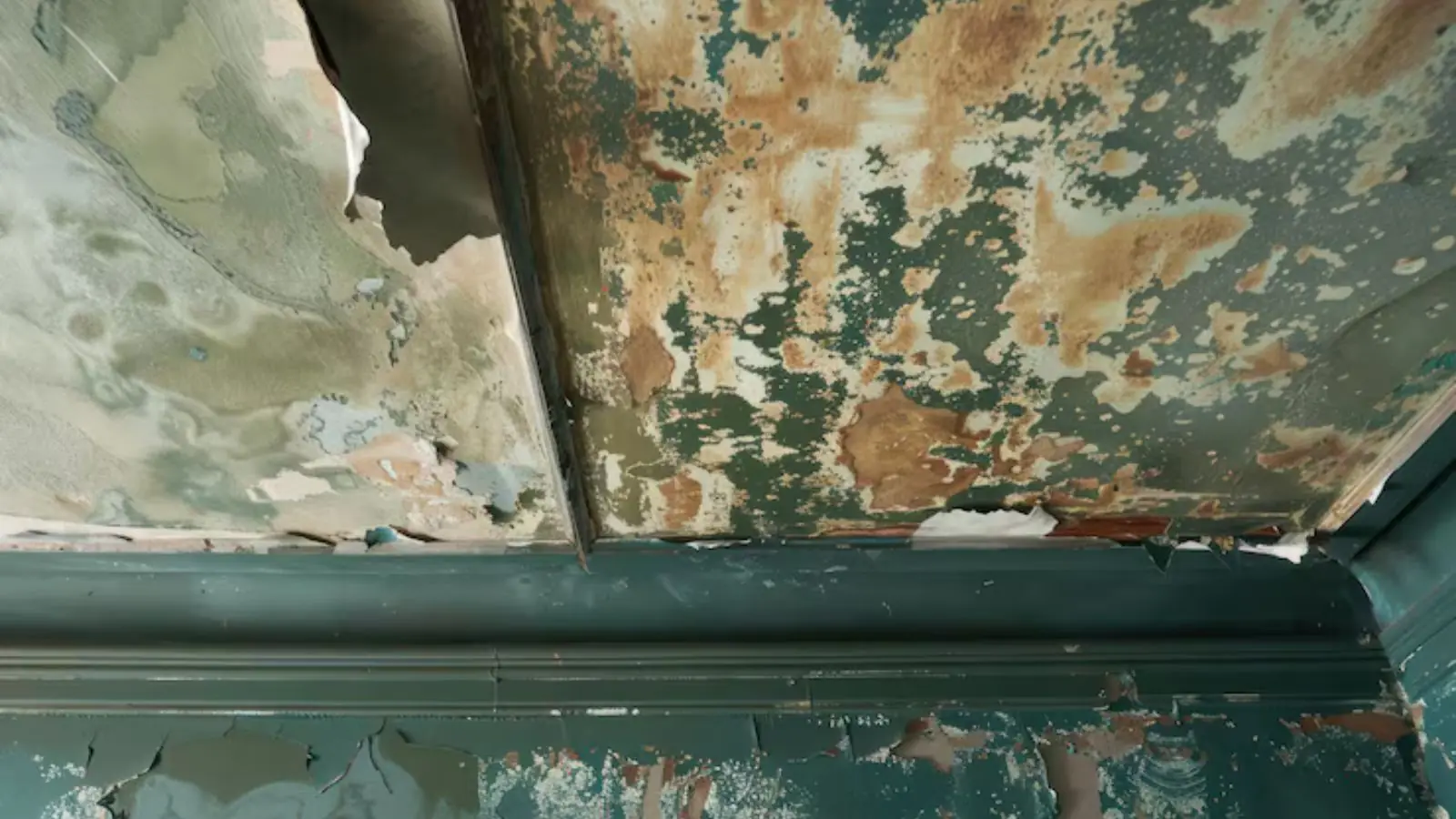
Replace the ceiling section if the drywall is sagging, soft, crumbling or still wet, or if the insulation above it was soaked. Repair in place with primer and paint only if the surface is firm, dry, flat and the stain is the only problem.
The decision comes down to what the drywall can still do. Good drywall is a flat, hard panel. Once it has softened or swelled, it loses strength and holds moisture, so cosmetic fixes will not last.
Touch TestsFive Quick Checks Before You Decide
You can learn a lot from a short inspection. Use a stepladder, wear eye protection and keep the ladder out from under any bulge.
- Press the ceiling around the stain with a flat palm. Firm and cool is a good sign. Spongy or damp is not.
- Look for sagging by sighting across the ceiling from the side. Even a slight dip means the drywall has absorbed water.
- Scratch a small spot with a screwdriver tip. Drywall that crumbles or peels in layers has lost its core.
- Check for new rings or growth in the stain over a few days. A growing stain means moisture is still arriving.
- Smell the area. A musty odor suggests damp material that has not dried.
Match What You See To The Right Fix
Find the row that fits your ceiling.
| Condition | Usual call | Why |
|---|---|---|
| Stain only, surface firm and dry | Repair in place | Stain-blocking primer and paint can finish it |
| Paint bubbling or peeling, drywall firm | Repair after drying check | Scrape, dry, prime and repaint |
| Soft or spongy spot | Replace the section | Drywall has lost strength and holds water |
| Sagging or bulging panel | Replace the section | Weight and fastener failure risk a fall |
| Still wet or dripping | Dry first, then decide | No repair holds over wet material |
| Wet or matted insulation above | Replace insulation, likely the drywall too | Wet insulation keeps the cavity damp |
| Textured ceiling with a large stain | Section repair plus texture match | The finish is the hard part of the job |
| Visible mold growth | Stop and assess | Growth needs its own handling plan |
When Priming And Painting Is Fine
An old, dry stain on firm drywall is cosmetic. If the leak was fixed long ago and a moisture meter reads normal, a stain-blocking primer followed by ceiling paint is usually all that is needed. Ordinary paint alone often lets the brown color bleed through.
Mark the edge of the stain with pencil and recheck it after the next heavy rain or snow melt. If it has not moved, you can paint with confidence.
When To CutWhen The Section Has To Come Out
Cut out any drywall that is soft, sagging, crumbling or visibly swollen. Cut back to the nearest joist so the new patch has framing to attach to. Remove and replace wet insulation, and let the framing dry before closing the opening.
Wet drywall can also hide problems in the cavity. Opening it gives you a look at the framing, the wiring and the source of the leak. That view is often worth the extra effort. The related water damage repair process covers the removal, drying and rebuild in order.
Snow Season Roof Melt In Commerce City
NWS Boulder climate statistics for the Denver station give an average seasonal snowfall of 56.9 inches, with the first measurable snow around October 19 and the last around April 28. That is a long stretch of snow on roofs, and melt can seep through weak flashing or an ice dam and show up as a ceiling stain. If your stain appears in winter, check it again when the roof is clear and dry.
Because the snow season can run from October into late April, a stain that returns every year at the same spot usually points to a roof detail rather than a one-time accident. Fixing the roof is the repair that matters, and it should come before you patch the ceiling.
Not Sure If It Is Dry?
Call the 24/7 line. A moisture reading takes the guesswork out of the decision.
Do Not Skip What Is Above
The stained drywall is the visible part of a bigger system. Insulation that stays wet loses its performance and feeds mold, and wet framing can stay damp for weeks. A repair that ignores the cavity is only half done.
If the ceiling has been wet for some time, ask a crew to check for growth. The mold remediation page explains how a contractor handles it. EPA guidance says no mold grows without water or moisture, so cleanup only works when the water problem is fixed first.
NearbyA Guide That Works Across The Metro
The same tests apply to homes in Aurora, Thornton and the rest of the area. Drywall behaves the same everywhere. Only the age of the roof, insulation and finish changes.
FAQCommon Questions
Can a water-stained ceiling dry out on its own?
A thin, shallow wet spot may. Thick drywall and the insulation above it often hold moisture for a long time without airflow or equipment. Check with a meter before painting.
Is a sagging ceiling dangerous?
It can be. Wet drywall is heavy and the fasteners can pull loose. Keep people out from under a sag and have it checked before it falls.
How do I know if the stain is old or new?
Mark the edge with pencil and check again over several days and after rain or snow melt. A stain that grows or gets damp is active. A stain that stays put and feels dry is old.
Do I have to replace the insulation above a wet ceiling?
Usually, if it was soaked. Wet insulation holds water and can keep the cavity damp. A crew can check and tell you what can stay.
Will stain-blocking primer hide a stain permanently?
It covers most stains well when the surface is dry and the leak is fixed. If the leak returns, the stain can return, so confirm the source is fixed first.
My ceiling stain shows up every winter. What does that mean?
A repeat winter stain often points to roof melt, an ice dam or flashing near that spot. Denver climate statistics list average snowfall of 56.9 inches, with the last measurable snow around April 28, so inspect the roof edge and flashing and fix it before repainting.
Water still spreading? Call (303) 952-8295 and a crew can be dispatched the same day when available.