

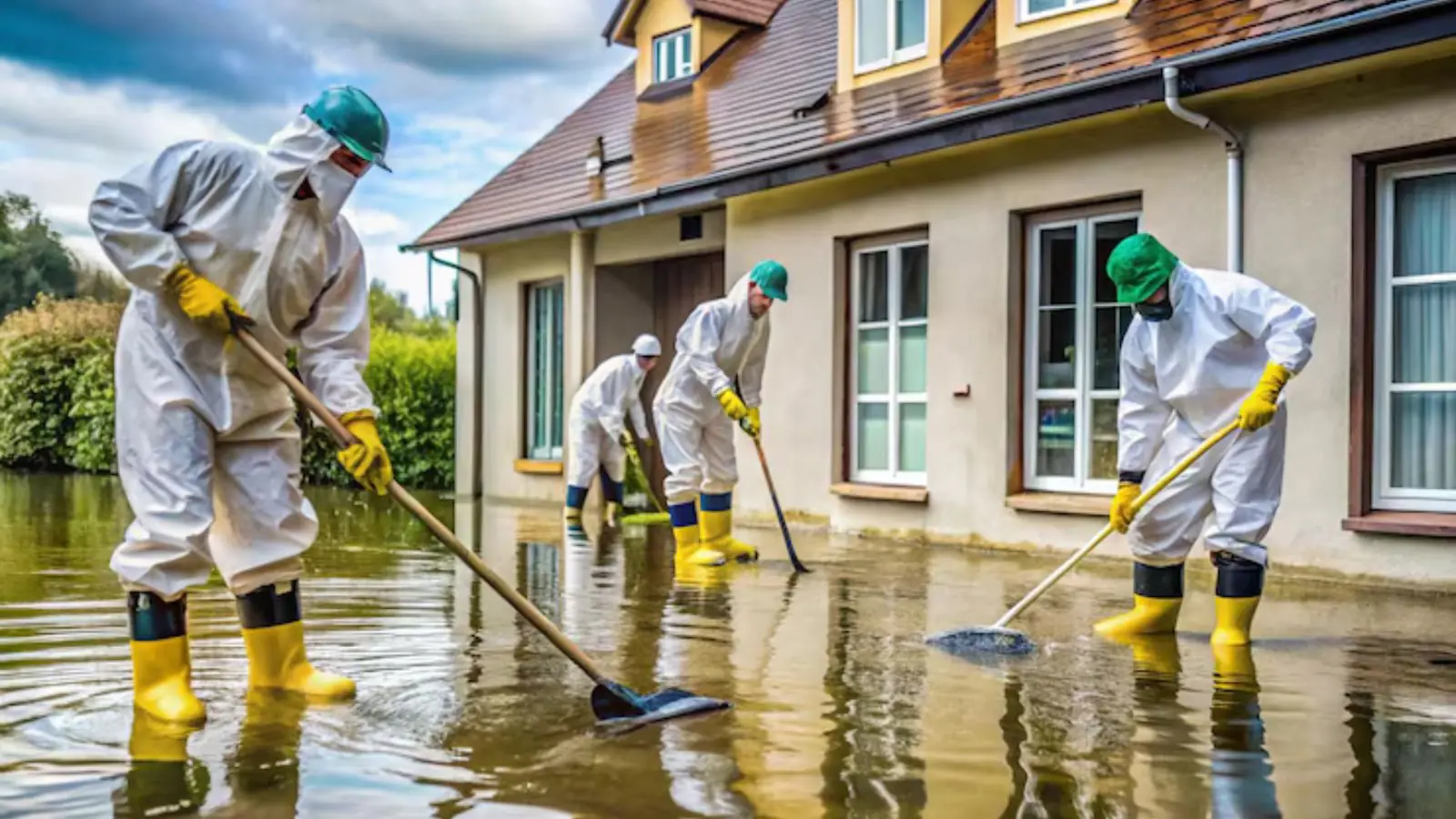
Water damage restoration is the full process of returning a building to its pre-loss condition after water gets in where it does not belong. It covers finding where the water went, removing it, drying every wet material, cleaning what can be saved and rebuilding what cannot.
The industry standard behind this work is ANSI/IICRC S500, which describes how professionals assess water losses and dry structures. Most jobs follow five stages, and each one has a clear purpose.
The ProcessThe Five Stages From Start To Finish
Small jobs may skip a stage, and large ones repeat some. The order stays the same.
Assess
A technician finds the source, checks which materials got wet and takes moisture readings. This sets the scope and shows how far the water traveled behind walls and under floors.
Extract
Pumps and wet vacuums pull out standing water. Removing liquid first is far faster than letting equipment evaporate it, so this stage shortens everything that follows.
Dry
Air movers and dehumidifiers pull moisture out of drywall, framing, subfloor and concrete. Technicians return to re-read the meters until each material reaches a dry reading.
Clean
Surfaces that stay in place are cleaned, and contents are sorted into those worth saving and those to discard. Water from a sewer line or outside flood calls for stricter cleaning and removal of porous materials.
Rebuild
Drywall, insulation, flooring, trim and paint are replaced where removal was needed. Some companies do this in house and others hand it to a contractor, so ask who is doing it and when.
Restoration Compared With Other Trades
Water problems often involve more than one trade. Each has a different job, and mixing them up leads to delays.
| Who | What they handle | What they do not handle |
|---|---|---|
| Plumber | Repairs the leaking pipe, fixture or water heater | Drying wet walls and floors |
| Restoration crew | Extraction, drying, cleaning and often rebuilding | Fixing the pipe or the roof |
| Waterproofing contractor | Prevents future seepage with drains, sealants or grading changes | Cleaning up after a loss that already happened |
| Roofer | Repairs the leak path in the roof | Drying the ceiling and attic below |
| Your insurer | Decides what your policy pays | Doing any physical work |
Why You Cannot Skip Straight To Painting
Drywall, wood and insulation hold water long after the surface feels dry. Painting over a wall that still has a high moisture reading traps that water behind the finish. Mold needs moisture to grow, so a damp wall becomes a problem again.
That is why restoration pairs drying with measurement. A technician records readings on day one and again on later visits, then removes equipment only when the numbers match a dry reference material. Guessing by touch is not reliable.
Who Responds To What In Commerce City
South Adams County Water and Sanitation District provides water and wastewater service for most of Commerce City, and the city itself is not the water provider. The district also has a page on its website for reporting a water or wastewater emergency. If the problem is in the public main or the street, that is the utility's job, so call the district at 303-288-2646.
The district covers over 65 square miles, so your first step is to check its service area map to confirm you are served. Once the water is inside your house, the utility does not dry your drywall. A restoration crew handles everything from the meter inward, which is why many homeowners make two calls.
Water Already Inside?
Call the 24/7 line and a crew can start with the assessment and extraction stages.
What To Expect From A Good Crew
You should get a written scope that lists what will be removed, dried and rebuilt. The scope and price are explained before work starts, and changes are discussed before they are made. Ask what equipment will run, how many days it is expected to stay and how drying will be verified.
Photos and moisture logs are part of the record. They help if you file a claim, and they let you compare what you were told against what happened. Check your policy and ask your insurer about coverage, since a crew cannot decide that for you.
By Water TypeClean, Gray And Black Water
A supply line break puts clean water in the house at first, but it turns worse the longer it sits. Water from a washing machine or dishwasher is gray water, and it carries soap and some contamination. Sewage and outside flood water are black water and call for removal of porous materials such as carpet padding and drywall.
The type of water changes the cleaning stage and how much gets removed. It rarely changes the first step, which is to stop the source and get the water out.
Related ServicesWhere Each Service Fits
Standing water on the floor falls under emergency water removal, which covers the extraction stage. Drying wet framing and subfloor is the job of water mitigation, and the rebuild stage overlaps with water damage repair.
Crews also work with homeowners in nearby cities. If you live near the edge of town, see how the process looks in Brighton or Aurora.
FAQCommon Questions
What is the difference between water damage restoration and water mitigation?
Mitigation is the early part of the job, which means stopping the damage from spreading through extraction and drying. Restoration is the whole process, including cleaning and rebuilding.
How long does water damage restoration take?
Drying commonly takes several days, and rebuilding adds more time depending on how much was removed. The crew can give a realistic schedule after taking moisture readings.
Do I need a plumber or a restoration company?
Often both. The plumber repairs the pipe or fixture, and the restoration crew removes water and dries the structure. If the leak is still running, stop it first.
Is restoration the same as waterproofing?
No. Restoration deals with damage that already happened. Waterproofing is work meant to keep water out in the future.
Who decides what my insurance pays?
Your insurer decides, based on your policy. A crew can supply photos, moisture readings and a written scope for your claim.
Who do I call if water is coming from the street or the main line in Commerce City?
Start with the water provider. South Adams County Water and Sanitation District serves most of the city, and its number is 303-288-2646. A restoration crew handles the damage inside the house.
Water still spreading? Call (303) 952-8295 and a crew can be dispatched the same day when available.