

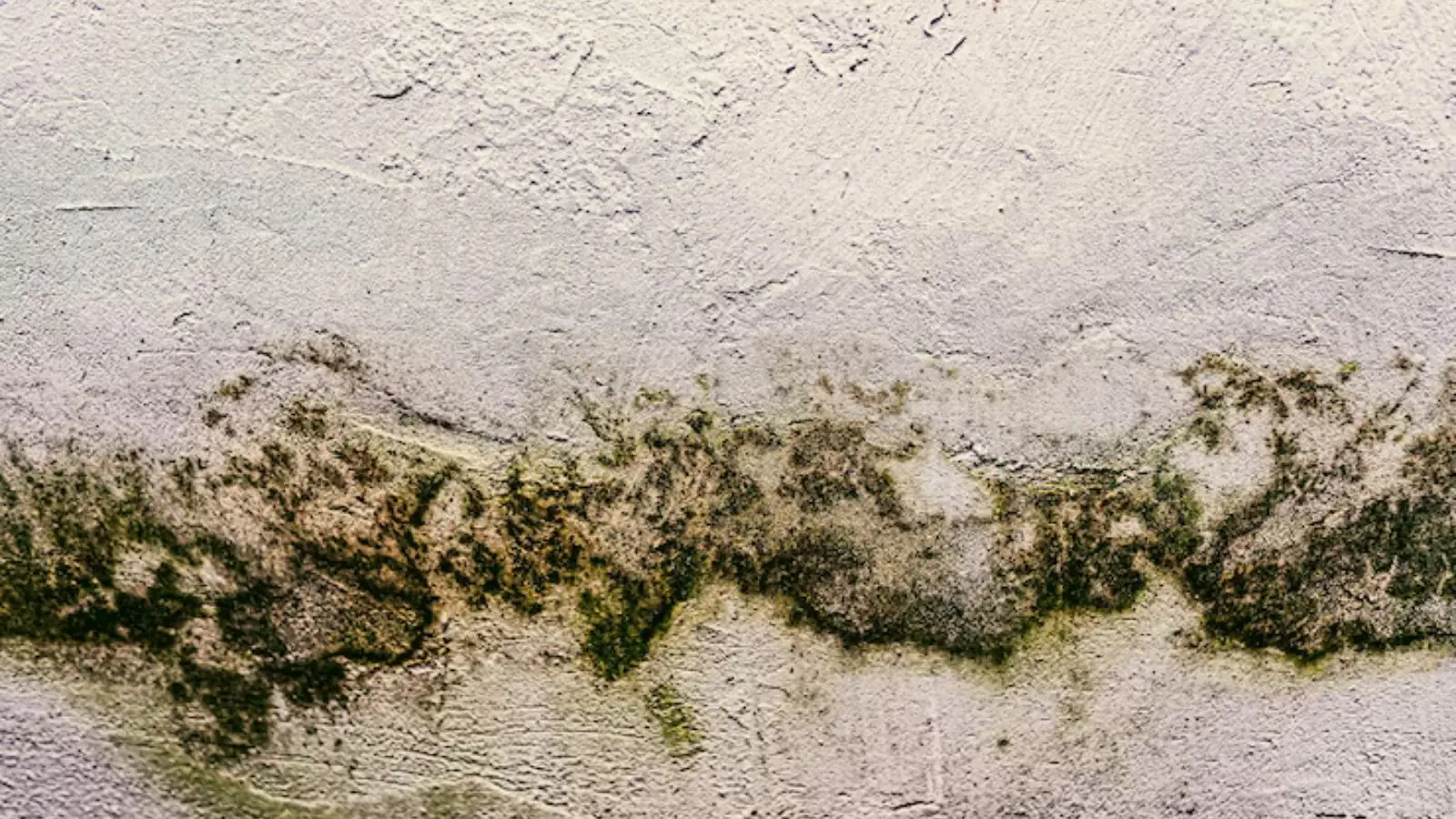
Nothing kills mold permanently, because spores are present in ordinary indoor and outdoor air and will grow again wherever moisture returns. Products can kill or remove the growth you see today, but they cannot stop new growth if the wall, floor or ceiling gets wet again.
The lasting fix has two parts. Remove the growth, and remove the moisture that fed it. The EPA guide on mold and moisture puts it simply: if mold is present, clean it up and fix the water problem.
The MythWhy A Kill Is Not Enough
Spray products often promise a permanent result. In practice, killing mold on a surface leaves the dead material in place, and the dead material is still in your walls. The stain, the debris and the damaged material remain.
A kill also does nothing about the cause. If the wall is damp tomorrow, new growth can start from the spores that settle on it. Surface treatments cannot reach inside porous materials such as drywall, insulation and ceiling tile, where growth can run below the surface.
What WorksMethods Compared
Each approach does something useful, but only a few address the full job.
| Method | What it does | What it cannot do |
|---|---|---|
| Detergent and water scrub | Removes surface growth from hard materials | Reach into porous material |
| Disinfectant or biocide spray | Kills growth on the surface | Remove dead material or stop regrowth |
| Drying and dehumidifying | Removes the moisture mold needs | Clean up growth that already exists |
| Removing porous material | Takes out drywall, insulation or carpet padding that stayed wet | Fix the water source by itself |
| Professional remediation | Contains, removes, cleans and dries with a plan | Prevent future water events |
| Painting over it | Hides the stain | Do anything about growth or moisture |
Moisture Control Is The Real Answer
Most indoor mold problems come back to a water event or constant dampness. Common sources include roof leaks, plumbing leaks, window condensation, damp basements and laundry or bath rooms with poor ventilation. Find the source first, then work on the surfaces.
Dry materials within a day or two of a leak when possible. Keep indoor humidity moderate, run exhaust fans and fix gutters and grading that send water toward the foundation. A hygrometer costs little and shows if a room stays humid.
These steps reduce the chance of regrowth. They do not make it impossible, so a quick recheck after heavy weather is a good habit.
What The EPA Says About Water
The EPA guide, A Brief Guide to Mold, Moisture and Your Home, states that no mold grows without water or moisture. It adds that if mold is present you must clean it up and fix the water problem. For a Commerce City homeowner, that means a repair plan should start with where the water came from, such as a roof, a pipe or a window well.
The same guide uses a rule of thumb of less than about 10 square feet for an area a homeowner might clean, and it points larger areas and heavy water damage toward remediation guidance. If you hire a contractor, it says to choose one with mold cleanup experience and check references. Ask any contractor how they will confirm the area is dry.
Mold Where Water Has Been?
Call the 24/7 line for moisture readings and a written scope.
Cleaning Versus Remediation
Cleaning is what a homeowner does for a small patch on a hard surface. Remediation is a planned job that contains the area, removes damaged materials, cleans what stays and dries the structure. ANSI/IICRC S520 is the industry standard that guides this kind of work.
Remediation matters when the area is large, when the material is porous or when the water was contaminated. A crew works from a written scope, and the scope and price are explained before work starts.
Dead MoldWhy Dead Mold Still Needs To Come Out
Whether growth is living or dead, the best practice is to remove it from the home, not leave it sealed in place. Cleaning with detergent and water works on hard surfaces. Porous materials with growth are usually removed and replaced.
Encapsulating or painting over a stain without removing the cause leaves the same problem under a new coat. If you plan to sell, the buyer may ask about the history, so keep records of what was done and who did it.
Next StepsWhat To Do Now
Start with a moisture check, then decide whether you are cleaning a small spot or planning removal. For larger jobs, a mold remediation crew can map the damage, and water mitigation dries the structure so growth does not restart.
Crews also help homeowners near Aurora and Brighton. Check your policy and ask your insurer whether a water event behind the mold is covered.
FAQCommon Questions
Is there anything that kills mold permanently?
No. Spores are in the air and will grow again where moisture returns. The lasting approach is to remove the growth and control the water.
Does vinegar or bleach kill mold for good?
Neither stops regrowth. They may help on hard surfaces, but moisture control is what keeps surfaces clean. Never mix bleach with ammonia or other cleaners.
Is dead mold still a problem?
Dead mold and its stain are still material in your home. The best practice is to remove it or clean it off, not leave it in place.
What is the difference between cleaning and remediation?
Cleaning is a small homeowner task on hard surfaces. Remediation is a planned job with containment, removal, cleaning and drying, guided by ANSI/IICRC S520.
Can I just paint over mold?
Painting hides the stain but leaves the growth and the moisture. Clean or remove the growth and fix the water problem first.
What should I ask about a leak that caused mold in my Commerce City home?
Ask where the water came from, how it was stopped and how dryness will be confirmed. The EPA guide says to fix the water problem, and to hire a contractor with mold cleanup experience and check references.
Water still spreading? Call (303) 952-8295 and a crew can be dispatched the same day when available.