

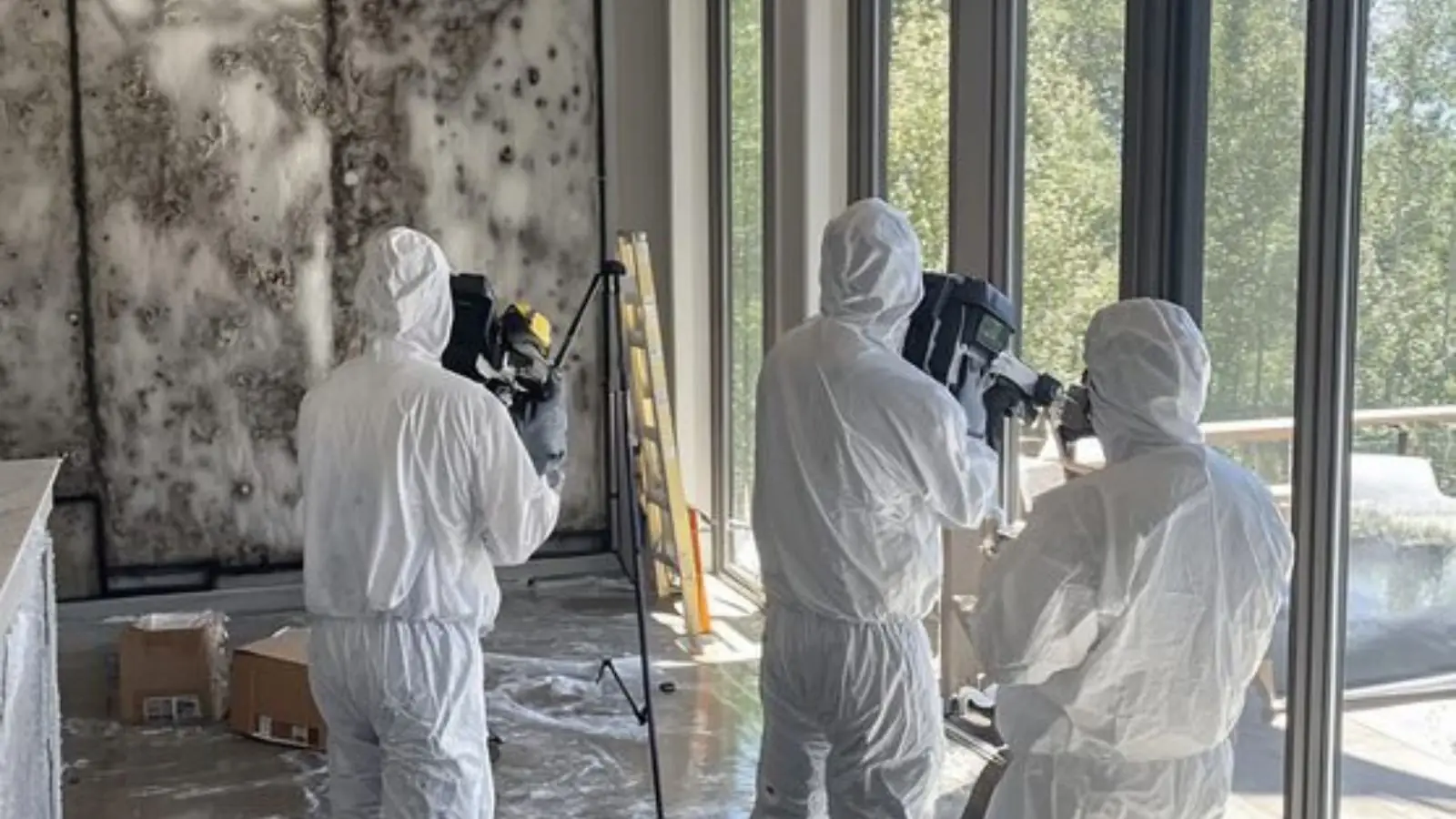
A professional basement mold job follows a set order. The crew finds and stops the moisture, seals off the work area, filters the air, removes what cannot be cleaned, cleans what can, dries everything and checks the result. Most small to medium basements take a few days from setup to sign-off.
The industry reference for mold work is ANSI/IICRC S520, a standard for professional mold remediation. A crew that follows it works from a written plan and documents each stage. Here is how that looks on your side of the basement door.
The ProcessSeven Stages Of A Professional Job
Stage names vary a little by company, but the order is consistent.
Inspection and moisture mapping
The estimator walks the basement, looks at the growth and uses a moisture meter to find damp materials. The goal is a written scope that names the area, the materials and the water source.
Fix or isolate the water
Active leaks must stop or be isolated first. Mold work done over a wet wall does not last, so the plan will say who repairs the source.
Containment
The crew hangs plastic sheeting and tapes the seams to seal the work zone. Doors, vents and openings that lead to the rest of the house are covered.
Negative air
A HEPA air machine pulls air out of the zone and exhausts it outside or through filters. This keeps the pressure lower inside the work area, so air flows in and not out.
Removal
Porous materials with growth, such as drywall, insulation and carpet, are cut out, bagged and carried out sealed. Crews wear respirators and protective suits.
Cleaning
Remaining surfaces are HEPA vacuumed, wiped and, where it helps, sanded or brushed. The same sequence repeats until visible growth and dust are gone.
Drying and verification
Fans and dehumidifiers dry the structure until moisture readings are back to normal. The crew then inspects the zone and may arrange a post-work check by a third party.
Why Containment And Negative Air Matter
Scrubbing or cutting out mold stirs growth into the air. Without containment, that dust can settle in the upstairs rooms, on ducts and on your belongings. The plastic barrier and air filtration are what keep a cleanup from spreading the problem.
You may notice the hum of the air machine and a zipper door in the plastic. Keep the pets and children out of the basement, and do not open the barrier to look. The crew will show you progress from the entrance.
Homeowner ViewDay By Day: What You Will See
Timing depends on the size of the job. This is a typical pattern for a moderate basement.
| Day | What the crew does | What you notice |
|---|---|---|
| Day 1 | Walkthrough, moisture readings, setup of plastic barriers | Plastic sheeting and a loud air machine |
| Day 2 | Removal of affected materials and HEPA cleaning | Bagged debris carried out, crew in protective suits |
| Day 3 | Final cleaning, drying equipment placed | Fans and dehumidifiers running around the clock |
| Day 4 or later | Moisture readings, inspection and takedown of containment | The plastic comes down and the room is clear |
| After | Rebuild by you or a contractor | New drywall, paint or flooring when readings are stable |
What Verification Looks Like
Verification means checking that the work did what the plan said. The crew compares moisture readings with a dry reference and looks for visible growth, dust and odor. The S520 standard describes post-remediation evaluation, and some jobs call for an outside assessor.
You can ask for the final readings and photos in writing. They record the condition at handover, which helps if you rebuild, sell the home or make an insurance claim. Ask your insurer what documents it wants before work starts.
Choosing A Crew In Commerce City
The EPA guide to mold, moisture and your home advises that if you hire a contractor, you should choose one with mold cleanup experience and check references. Before you sign, ask for the names of two recent basement customers and call them. Their answers will tell you more about cleanliness, communication and follow-up than a brochure.
Ask each company to describe its containment and air filtration in your basement in particular. A crew with real experience will name where the barrier goes, where the air machine sits and how the debris leaves the house. A vague answer is a reason to keep looking.
Want The Plan In Writing?
Call the 24/7 line. The scope and price are explained before work starts.
How To Prepare Your Basement
Clear a path to the work zone and move valuables out of the basement. Do not move moldy items through the house. If the area is wet, call for water mitigation first, since drying is part of the plan and the earlier it starts, the better.
Ask where the crew will park, where the equipment will plug in and which door they will use. A short talk on day one saves a lot of friction on day two.
Nearby TownsThe Same Process Across The Metro
Crews working in Thornton, Brighton and the rest of the northeast metro follow the same stages. What differs is the size of the basement and the number of rooms involved. For the full service description, see the mold remediation page.
FAQCommon Questions
How long does professional basement mold removal take?
Small to moderate jobs commonly take a few days from setup to takedown, and larger ones take longer. Drying time depends on how wet the structure is, so the crew will explain the schedule after the walkthrough.
Do I have to leave my home during mold removal?
Often not, if the containment is sound and the basement is separate from the living space. Ask the crew about your layout, and keep pets and children out of the work area.
What is ANSI/IICRC S520?
It is an industry standard for professional mold remediation. It describes assessment, containment, removal and verification, and many companies use it as a reference for their process.
Will the basement be tested after the work?
Verification is part of the job, and it usually includes visual inspection and moisture readings. Ask whether a third-party assessment makes sense for your situation.
Can I do the rebuild myself afterward?
Often yes, once readings are stable. Ask whether your state licenses mold work and confirm that any hired contractor can provide a copy of the city permit if one is required.
How do I check a Commerce City mold contractor before hiring?
Ask for experience with mold cleanup and for references you can call, as the EPA guide advises. Request the written scope and ask them to describe containment and air filtration for your basement.
Water still spreading? Call (303) 952-8295 and a crew can be dispatched the same day when available.